Let me explain now in more detail why we are now back to the risk of a total systemic financial meltdown...
It is no surprise as financial institutions in the US and around advanced economies are going bust: in the US the latest victims were WaMu (the largest US S&L) and today Wachovia (the sixth largest US bank); in the UK after Northern Rock and the acquisition of HBOS by Lloyds TSB you now have the bust and rescue of B&B; in Belgium you had Fortis going bust and being rescued over the weekend; in German HRE, a major financial institution is also near bust and in need of a government rescue. So this is not just a US financial crisis; it is a global financial crisis hitting institutions in the US, UK, Eurozone and other advanced economies (Iceland, Australia, New Zealand, Canada etc.).
And the strains in financial markets – especially short term interbank markets - are becoming more severe in spite of the Fed and other central banks having literally injected about $300 billion of liquidity in the financial system last week alone including massive liquidity lending to Morgan and Goldman. In a solvency crisis and credit crisis that goes well beyond illiquidity no one is lending to counterparties as no one trusts any counterparty (even the safest ones) and everyone is hoarding the liquidity that is injected by central banks. And since this liquidity goes only to banks and major broker dealers the rest of the shadow banking system has not access to this liquidity as the credit transmission mechanisms is blocked.
After the bust of Bear and Lehman and the merger of Merrill with BofA I suggested that Morgan Stanley and Goldman Sachs should also merge with a large financial institution that has a large base of insured deposits so as to avoid a run on their overnite liabilities. Instead Morgan and Goldman went for the cosmetic approach of converting into bank holding companies as a way to get further liquidity support – and regulation as banks – of the Fed and as a way to acquire safe deposits. But neither institution can create in a short time a franchise of branches and neither one has the time and resources to acquire smaller banks. And the injection of $8 b of Japanese capital into Morgan and $5 b of capital from Buffett into Goldman is a drop in the ocean as both institutions need much more capital. Thus, the gambit of converting into bank while not being banks yet has not worked and the run against them has accelerated in the last week: Morgan’s CDS spread went through the roof on Friday to over 1200 and the firm has already lost over a third of its hedge funds clients together with their highly profitable prime brokering business (this is really a kiss of death for Morgan); and the coming roll-off of the interbank lines to Morgan would seal its collapse. Even Goldman Sachs is under severe stress losing business, losing money, experiencing a severe widening of its CDS spreads and at risk of losing most of its values most of its lines of business (including trading) are now losing money.
more

www.malaymail.com/news/world/2026/01/11/bomb-attac…
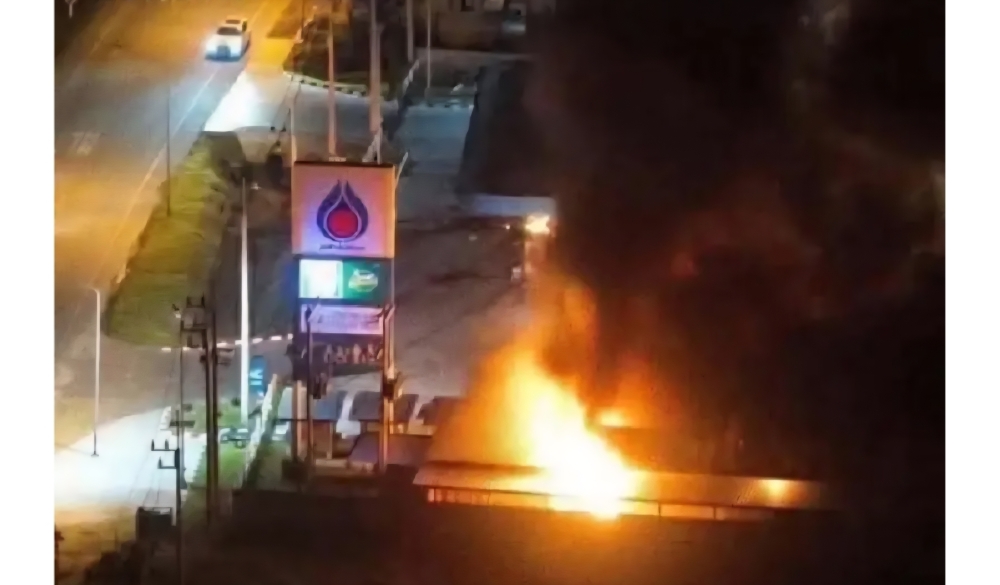
BANGKOK, Jan 11 — A series of late-night bomb attacks targeted 11 PTT petrol stations in Thailand’s southern border provinces of Narathiwat, Pattani and Yala…
www.khaama.com/at-least-eight-refugees-die-37-resc…

At least eight refugees died and 37 were rescued when their boat sank off Badmeli near Izmir, Turkish authorities said on Saturday.
katu.com/news/local/oregon-confirms-first-measles-…

Health officials in Oregon have confirmed the state's first measles cases of 2026, with two people diagnosed in Linn County.
abc11.com/post/measles-north-carolina-state-report…

Measles in North Carolina: State reports 5th case linked to South Carolina surge