A new three-dimensional computer model successfully recreated a star merger and resulting unusual three-ring nebula.
By Ker Than -- Space.com
Three mysterious debris rings surrounding Supernova 1987A were formed during an ancient two-star merger that eventually led to an enormous stellar explosion, a new computer model suggests.
The model, detailed in the Feb. 23 issue of the journal Science, was announced on the 20th anniversary of the supernova’s discovery.
Supernova 1987A, or just SN1987A, was the closest and brightest supernova observed in more than 400 years. It blazed as brightly as 100 million suns before gradually fading. The explosion occurred in the Large Magellanic Cloud, a dwarf galaxy only 160,000 light years away. It was first spotted on Feb. 23, 1987 and marked the first time modern astronomers could observe a star explosion in detail.
The discovery of three rings of gas [image] around SN1987 led astronomers to propose that the supernova resulted from the merger of two stars—one about 15 solar masses and the other about 5 solar masses—into a red supergiant. According to this scenario, the red supergiant eventually shrunk into a blue supergiant, called Sanduleak -69 202, or SK -69 for short, about 20,000 years ago before finally exploding. The entire process is thought to have taken a few hundred years.
This speculative theory is now bolstered by a new three-dimensional computer model which successfully recreated the star merger and the unusual three-ring nebula.
The model, developed by Thomas Morris and Philipp Podsiadlowski of the University of Oxford, suggests the triple rings were created by two minor explosions which occurred before SK -69 went supernova. One occurred during the initial merging of the two stars into a red supergiant.
more

www.malaymail.com/news/world/2026/01/11/bomb-attac…
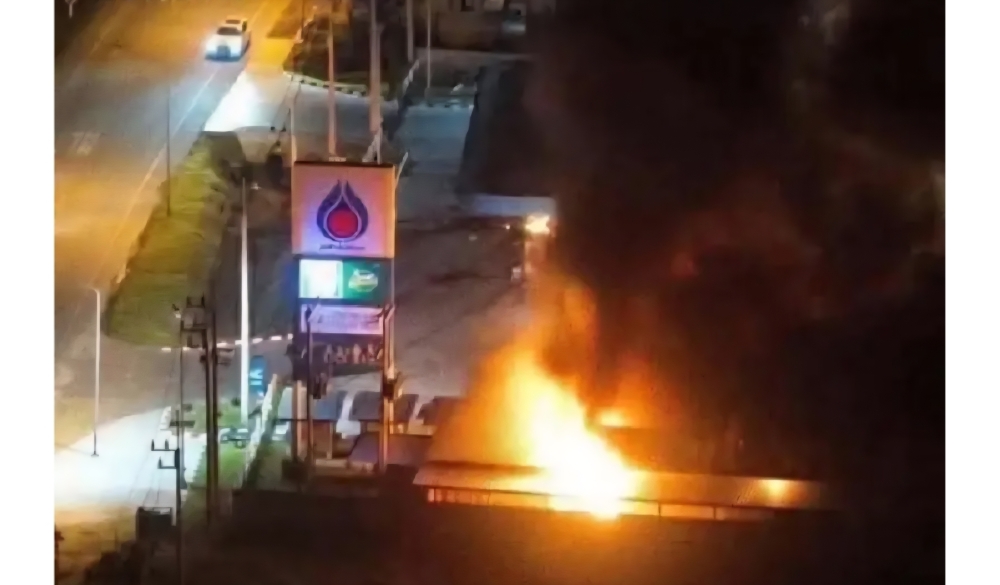
BANGKOK, Jan 11 — A series of late-night bomb attacks targeted 11 PTT petrol stations in Thailand’s southern border provinces of Narathiwat, Pattani and Yala…
www.khaama.com/at-least-eight-refugees-die-37-resc…

At least eight refugees died and 37 were rescued when their boat sank off Badmeli near Izmir, Turkish authorities said on Saturday.
katu.com/news/local/oregon-confirms-first-measles-…

Health officials in Oregon have confirmed the state's first measles cases of 2026, with two people diagnosed in Linn County.
abc11.com/post/measles-north-carolina-state-report…
Measles in North Carolina: State reports 5th case linked to South Carolina surge