George Soros, the prominent financier, avoids using the financial contracts known as derivatives “because we don’t really understand how they work.” Felix G. Rohatyn, the investment banker who saved New York from financial catastrophe in the 1970s, described derivatives as potential “hydrogen bombs.” {xtypo_quote_right} “Clearly, derivatives are a centerpiece of the crisis, and [Greenspan] was the leading proponent of the deregulation of derivatives,” said Frank Partnoy, a law professor at the University of San Diego and an expert on financial regulation. {/xtypo_quote_right}
And Warren E. Buffett presciently observed five years ago that derivatives were “financial weapons of mass destruction, carrying dangers that, while now latent, are potentially lethal.”
One prominent financial figure, however, has long thought otherwise. And his views held the greatest sway in debates about the regulation and use of derivatives — exotic contracts that promised to protect investors from losses, thereby stimulating riskier practices that led to the financial crisis. For more than a decade, the former Federal Reserve Chairman Alan Greenspan has fiercely objected whenever derivatives have come under scrutiny in Congress or on Wall Street. “What we have found over the years in the marketplace is that derivatives have been an extraordinarily useful vehicle to transfer risk from those who shouldn’t be taking it to those who are willing to and are capable of doing so,” Mr. Greenspan told the Senate Banking Committee in 2003. “We think it would be a mistake” to more deeply regulate the contracts, he added.
Today, with the world caught in an economic tempest that Mr. Greenspan recently described as “the type of wrenching financial crisis that comes along only once in a century,” his faith in derivatives remains unshaken.
more
Read More: The New York Times

www.malaymail.com/news/world/2026/01/11/bomb-attac…
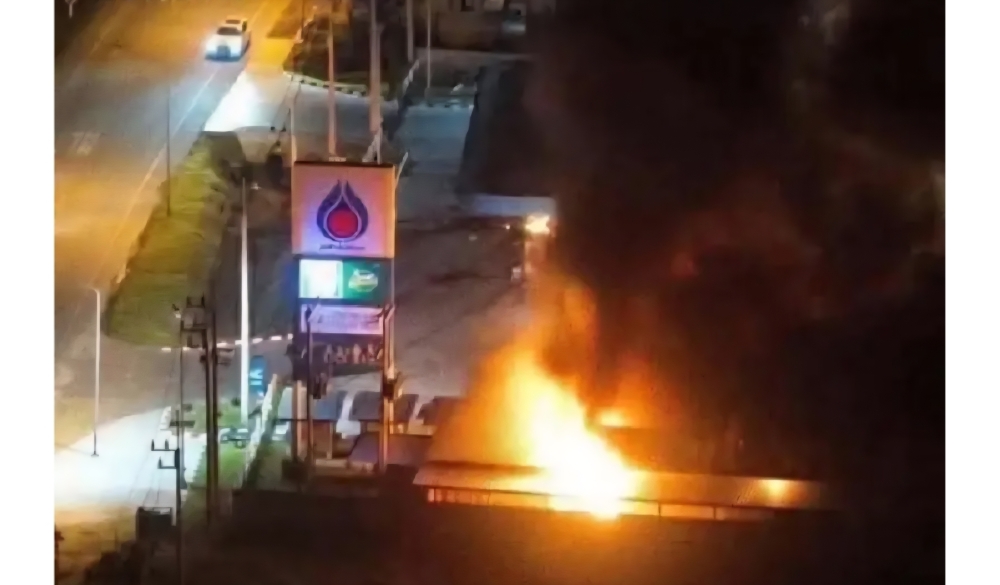
BANGKOK, Jan 11 — A series of late-night bomb attacks targeted 11 PTT petrol stations in Thailand’s southern border provinces of Narathiwat, Pattani and Yala…
www.khaama.com/at-least-eight-refugees-die-37-resc…

At least eight refugees died and 37 were rescued when their boat sank off Badmeli near Izmir, Turkish authorities said on Saturday.
katu.com/news/local/oregon-confirms-first-measles-…

Health officials in Oregon have confirmed the state's first measles cases of 2026, with two people diagnosed in Linn County.
abc11.com/post/measles-north-carolina-state-report…

Measles in North Carolina: State reports 5th case linked to South Carolina surge