Single CRISPR treatment provides long-term benefits in mice | Duke University
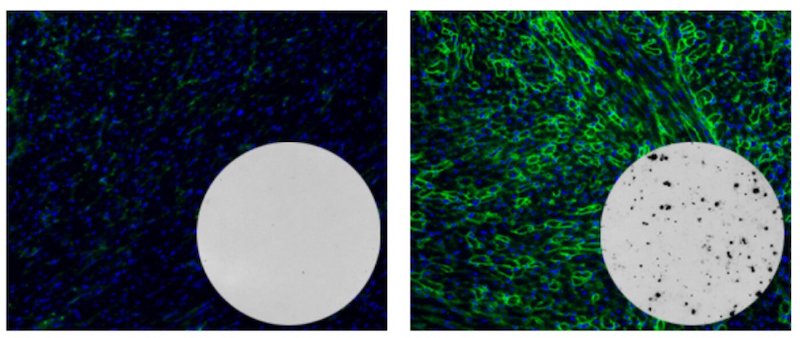 1These images highlight the stark contrast between mouse models of untreated Duchenne muscular dystrophy (left) and those treated with a CRISPR-based genetic therapy after one year (right). On the right, green indicates a higher level of dystrophin gene expression. The dark spots in the inset show T cells from these mice responding to the bacterial Cas9 protein, indicating the presence of an immune response to the therapy. Credit: Charles Gersbach, Duke University
Feb. 18, 2019 (MedicalXpress) -- Researchers at Duke University have shown that a single systemic treatment using CRISPR genome editing technology can safely and stably correct a genetic disease -- Duchenne muscular dystrophy (DMD) -- for more than a year in mice, despite observed immune responses and alternative gene editing outcomes.
The study appears online Feb. 18 in the journal Nature Medicine.
In 2016, Charles Gersbach, the Rooney Family Associate Professor of Biomedical Engineering at Duke, published one of the first successful uses of CRISPR to treat an animal model of genetic disease with a strategy that has the potential to be translated to human therapy. Many additional examples have since been published, and several genome editing therapies targeting human diseases are currently in clinical trials, with more on the way.
Gersbach's latest research focuses on a mouse model of DMD, which is caused by the body's inability to produce dystrophin, a long protein chain that binds the interior of a muscle fiber to its surrounding support structure.
(more)
- CategoriesEdited | Front Page Stories | All Content | Health | Science | North America | News | News -- WNT Selected | Slider
- Date rangeMonday, February 18, 2019
- Last modifiedMonday, February 18, 2019
