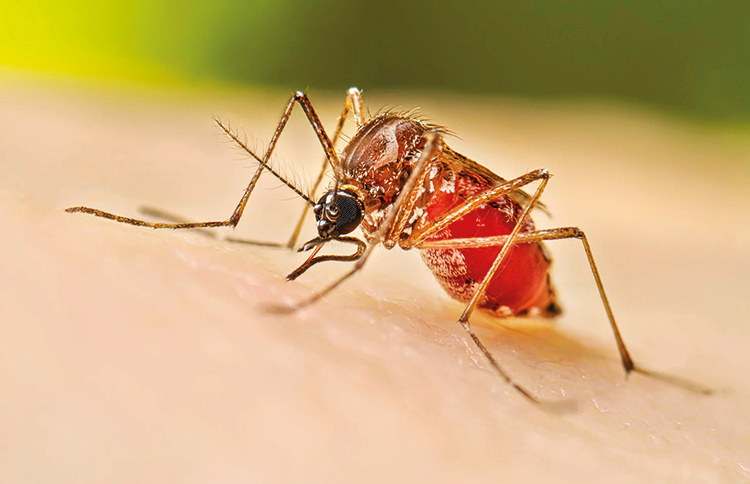
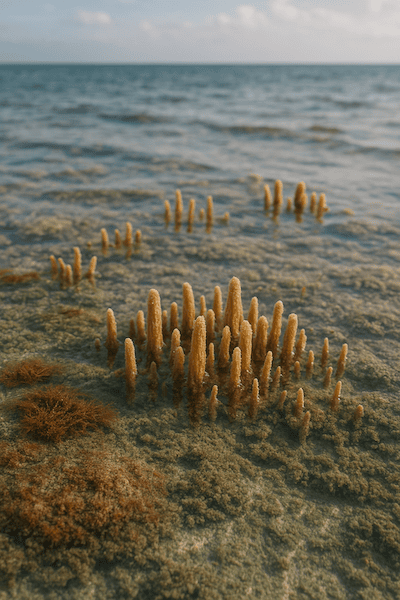
 First life on Earth. "Realistic" image by Copilot
Google Search Labs | AI Overview
July 10, 2025
The first life on Earth was microscopic and existed at least 3.5 billion years ago.
These early life forms were likely simple, single-celled organisms called prokaryotes, and their existence is indicated by chemical and structural traces found in ancient rocks. While the exact details of how life originated remain a mystery, scientists believe it emerged from non-living matter through a process called abiogenesis. [1, 2, 3, 4, 5, 6, 7, 8]
Here's a more detailed look:
AI responses may include mistakes.

www.malaymail.com/news/world/2026/01/11/bomb-attac…

BANGKOK, Jan 11 — A series of late-night bomb attacks targeted 11 PTT petrol stations in Thailand’s southern border provinces of Narathiwat, Pattani and Yala…
www.khaama.com/at-least-eight-refugees-die-37-resc…

At least eight refugees died and 37 were rescued when their boat sank off Badmeli near Izmir, Turkish authorities said on Saturday.
katu.com/news/local/oregon-confirms-first-measles-…

Health officials in Oregon have confirmed the state's first measles cases of 2026, with two people diagnosed in Linn County.
abc11.com/post/measles-north-carolina-state-report…
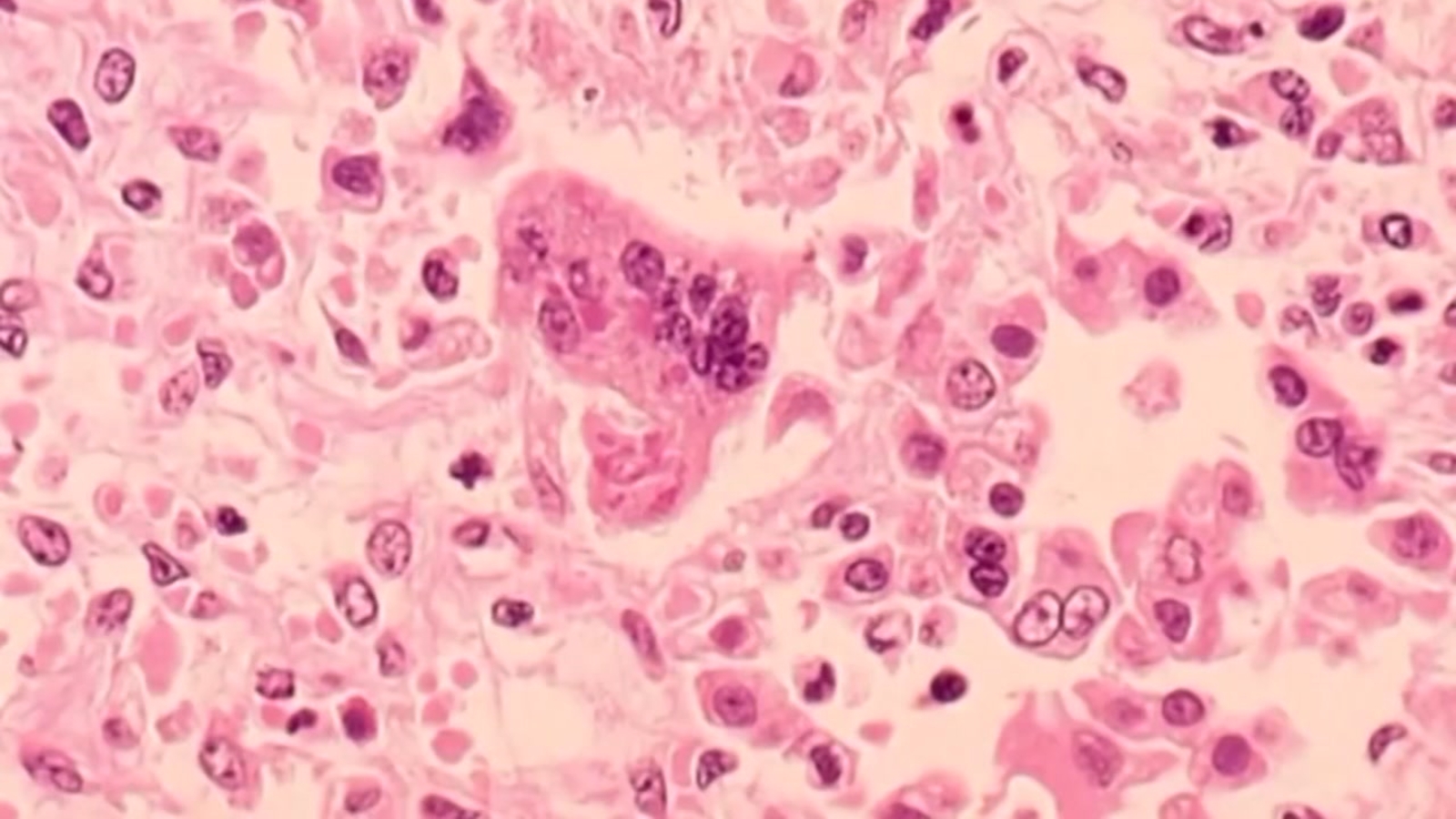
Measles in North Carolina: State reports 5th case linked to South Carolina surge