A Secret Oil Gusher Inside Citigroup (Pam Martens)
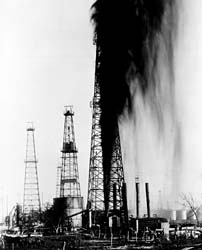
If you want to flush out market manipulation, don’t turn to the sleuths in Congress.
They’ve been probing trading of the oil markets for two years and completely missed a company at the center of the action. During that period, a barrel of crude oil has risen from $50 to $140, leaving a wide swatch of Americans facing a choice this coming winter of buying food or paying their heating bill. The company that Congress overlooked should have been an easy suspect. It launched the oil trading career of the infamous fugitive, Marc Rich, pardoned by President Clinton in the final hours of his presidency. It was at one time the largest oil and metals trader in the world. In the late 90s it bought up 129 million ounces of silver for legendary investor Warren Buffet’s company, Berkshire Hathaway, in London’s unregulated over-the-counter market. In 1990, it was one of the first entrants into an ill-fated Russian oil venture called White Nights. In 2005, while part of Citigroup, the largest U.S. banking conglomerate perpetually scolded for obscene executive pay, it handed its chief and top oil trader, Andrew J. Hall, $125 Million for one year’s work. According to the Wall Street Journal, that was five times the pay package for Chuck Prince, CEO of the entire Citigroup conglomerate that year and $55 Million more than the CEO of Exxon-Mobil.
{xtypo_quote_left} Enron also called itself the “premier” energy trading organization. Apparently impressed with that model, Citigroup Energy has hired a significant number of former Enron traders. {/xtypo_quote_left}
Given this storied history and two years of congressional testimony on oil trading skullduggery, one would expect to find volumes of current information available about this oil trading juggernaut. Instead, this company’s activities are so secret that its web site is a one page affair and lists only the addresses, phone and fax numbers of its offices in the U.S., London, Geneva, and Singapore. No officers’ names, no bios, no history, no press releases. And while the Wall Street firms of Goldman Sachs and Morgan Stanley have been fingered by Congressman Bart Stupak (D-Mich) for gaming the system, Phibro has completely escaped scrutiny during a seven year period when crude oil has risen an astonishing 697%.
Phibro is the old Philipp Brothers trading firm that has resided secretly and quietly on Nyala Farms Road in Westport, Connecticut as a subsidiary of the banking/brokerage behemoth, Citigroup, since the merger of Traveler’s Group and Citicorp (parent of Citibank) in 1998. Traveler’s Group owned Phibro at the time of the merger. Despite the fact that Phibro has provided Citigroup with $2 billion in revenue over the past three years, the 205-page annual report for Citigroup in 2007 carries only the following one-sentence footnote on commodity income that acknowledges the existence of this company. “Primarily includes the results of Phibro Inc., which trades crude oil, refined oil products, natural gas, and other commodities.”
Combing through government archives, the first noteworthy appearance of Phibro occurs on April 6, 2001, when the Wall Street law firm of Sullivan & Cromwell sent a letter to the Commodity Futures Trading Commission (CFTC), the Federal regulator of oil and other commodity trading, acknowledging that it was representing “the Energy Group.” The letter was noteworthy because it delineated just who had teamed up to grease the oil rigging in Washington: namely, two investment banks (Goldman Sachs and Morgan Stanley); a house of cards that would later collapse (Enron); a proprietary trading firm inside a Frankenbank (Phibro inside Citigroup); and two real energy firms (BP Amoco and Koch Industries).
- Categories
- Date rangeSaturday, June 21, 2008
- Last modifiedWednesday, November 06, 2013
